
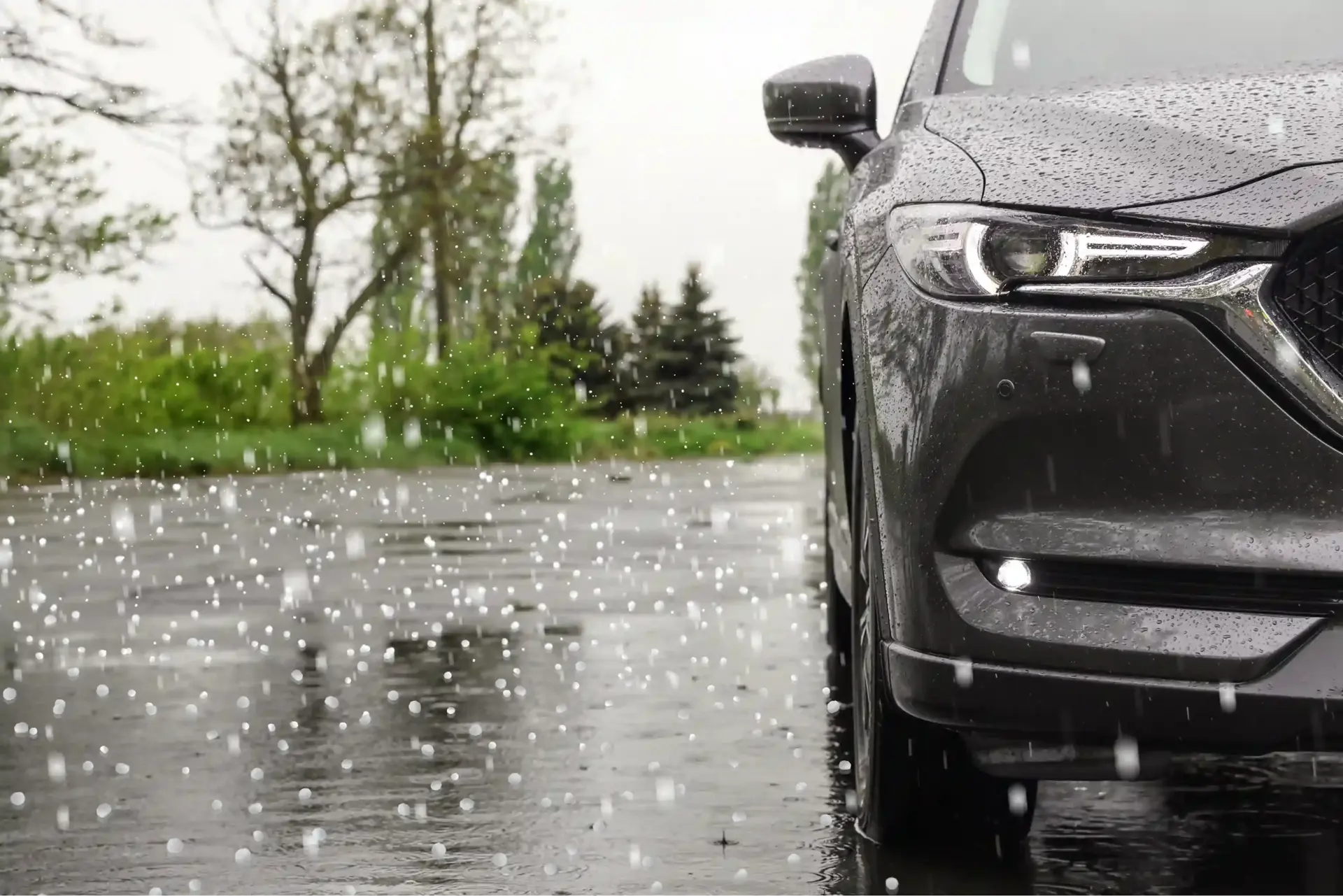
Living in Austin, Texas, means dealing with unpredictable weather that can manifest in various ways, one of the most common and severe being hail storms. Anyone who has lived in Texas’ capital city is likely familiar with Austin’s hail storm history, so at Hail-Tech PDR, we’re here to help you prepare for the Texas hail season. Following a few of our hail damage prevention tips can help you avoid damage to your car and the repair bills that go with it.
When Is Texas Hail Season?
With its reputation for unforgiving heatwaves, it might surprise you to learn that Texas consistently ranks among the most hail-prone states in the country, with thousands of severe hail events recorded over the past few decades alone.
Looking at Austin’s hail storm history, hail season typically runs from March through June, with the highest risk occurring in April and May. These storms form when warm, moist air from the Gulf collides with colder air descending from the north, creating huge thunderstorms capable of producing shockingly large hailstones.
That said, while spring is the primary Texas hail season, we also often experience a secondary hail window in early fall, usually between September and October. The key takeaway is simple: if you live in Austin, hail is rather common and should be expected at least a few times per year, and you should be prepared for it.
Austin Hail Storms History and Trends
Austin sits in what meteorologists call “Hail Alley,” a region known for frequent and severe hailstorms. This explains why Austin’s hail storm history is extensive, with more than 1,100 hail events recorded within a 15-mile radius of the city in the past decade.
In addition to the frequent storms during the Texas hail season, Austin is also known for particularly large hailstones, with some reaching up to 4 inches in diameter—more than enough to cause major vehicle damage.
While they typically cause only superficial damage, hailstorms can be extremely destructive; a series of storms in 2021 caused over a billion dollars in damage across Texas, highlighting just how serious these events can be.
For car owners, this means the risk is not only frequent but also potentially expensive to fix.

Why Hail Is So Damaging to Vehicles
Hail damage happens quickly and usually without warning. Large hailstones can dent metal panels, crack windshields, and leave your vehicle’s paint chipped and scarred in a matter of seconds.
In severe storms, hail can be driven by strong winds that increase the impact force and cause even more damage from multiple angles as the wind gusts. In some cases, repair costs range from minor dent removal to full panel replacements costing thousands of dollars.
Because storms are often localized, one neighborhood may be hit hard while another nearby remains untouched, so proper preparation is essential even if you’ve avoided damage in the past.
Hail Damage Prevention Tips for Your Car
Because of how sudden and fast the Texas hail season can hit you, the best way to avoid costly repairs is to take proactive steps before a storm hits. Here are some of the most effective hail damage prevention tips for Austin drivers.
Park Under Cover Whenever Possible
The simplest and most effective protection is parking in a garage or covered structure. If you have access to covered parking, use it during peak hail season.
Monitor Weather Alerts Closely
Stay informed by signing up for local weather alerts. Even a short warning window can give you time to move your vehicle to a safer location before a storm arrives, and even something as simple as a tree can provide some measure of protection in a pinch.
Use a Hail Car Cover
If covered parking isn’t available, a padded hail protection cover can significantly reduce potential damage. These are designed to absorb impact and protect vulnerable surfaces like the hood, roof, and trunk.
Plan Ahead During Storm Season
During the spring months, avoid parking in open areas for long periods when storms are in the forecast. If you’re at work or out running errands, try making it a habit to take note of any nearby parking garages or sheltered areas you could use.
Keep Your Insurance Updated
Review your auto insurance policy before hail season begins. Comprehensive coverage typically includes hail damage, but deductibles and limits can vary.
Act Quickly After a Storm
If your vehicle is hit by hail, schedule an inspection as soon as possible. Paintless dent repair for hail damage is most usually effective when addressed early.

Austin’s hail storm history is well-documented, and storms are an unavoidable eventuality for Austinites, often with little warning and bringing the potential for serious vehicle damage. By understanding the Texas hail season patterns and following a few simple hail damage prevention tips, you can significantly reduce the risk to your vehicle.
Preparation is the difference between a minor inconvenience and a major expense, so if you still have questions or if you’ve experienced hail damage recently, give us a call at 512-690-4914 or contact us online!