

Hailstorms can leave behind unsightly damage that often ruins your car’s entire appearance, and on top of that, such extensive damage is often costly to fix. While nobody likes having to deal with the headache of insurance companies, that’s one of the things insurance is there to help with, but your insurance payout often depends on how well you document it. When it comes to exactly how to document hail damage for insurance, it’s essential to gather clear, organized evidence before any repairs begin. Proper documentation not only strengthens your case but will also speed up the entire hail damage insurance claim process, making your life far easier in the long run.
Why Documentation Matters
Insurance companies rely heavily on evidence to evaluate claims before deciding how much to pay out or whether to deny them outright. Unfortunately, even legitimate damage claims can be underpaid or denied if they are not properly recorded. Detailed photos, notes, and supporting documents are important for proving the extent of the damage and for directly linking it to the storm that caused it.
Start With a Safe Inspection
Before anything else, make sure conditions are safe. Once the storm has passed, walk around the vehicle and examine it for any visible signs of damage, such as dents, cracks, or broken pieces of material. Stay at ground level when possible and avoid climbing onto roofs or unstable surfaces. If you’re struggling to see the roof of your car, use your phone’s camera and hold it above your head to take a video; it can give you a good look at the roof without risking a slip on ice while trying to get a peek.
Take note of all affected areas. The most commonly damaged spots by hail are:
- Windows
- Windshields
- Roof
- Hood
This initial inspection will lay the foundation for your claim, and as we’ll cover in the next section, pictures are essential.
Take Clear Photos and Videos
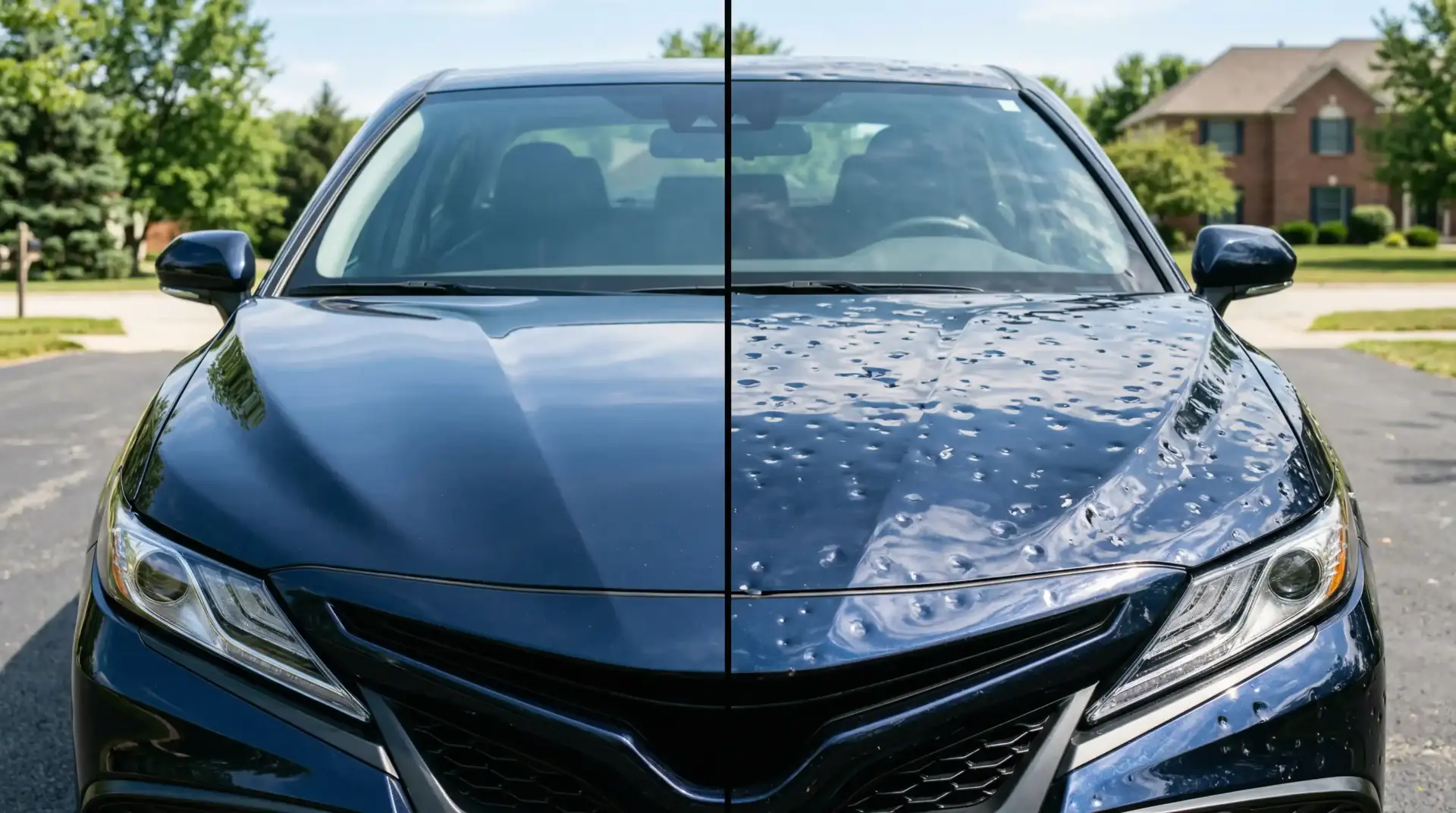
High-quality visuals are the most important part of documenting hail damage. Use your phone or camera to capture both wide and close-up shots to give your insurance the best possible angles and views of any damage.
Be sure to include:
- Full views of your vehicle to show the overall impact
- Close-ups of dents, cracks, or broken components
- Multiple angles of each damaged area
Adding a size reference, such as a coin or a ruler, can help provide context for the size of any dents and demonstrate their severity.
It’s also important to note that photos should ideally be taken before any cleanup or repairs occur, so the original damage is clearly visible.
Record Dates, Times, and Details
Pictures and videos are usually a given, but the additional recommended documentation is much less obvious. To cover all your bases and set you up for success, you should also keep a written record that includes the following:
- Date and time of the storm
- When you discovered the damage
- Weather conditions, if known
- A detailed list of all damaged areas
This information helps your insurer verify that the damage matches a specific weather event and supports your claim timeline, making it more likely to be approved.
Keep Everything Organized
Given that these claims are reviewed by individuals who do this all day long, proper organization can make or break your claim. Store all your documentation in one place, whether that is a digital folder or cloud storage.
Make sure to:
- Label photos clearly by location or damage type
- Keep files grouped by date
- Maintain a single folder for your entire claim
Having a clean, easy-to-review set of files not only improves your chances of coverage but also helps adjusters process your claim quickly, so you can have things taken care of as soon as possible.
Save Receipts and Repair Records
While it’s best to avoid getting any repair work done before your claim is approved, sometimes this simply isn’t possible, and that’s OK. If you have to make temporary repairs to prevent further damage, make sure to keep every receipt and invoice. Insurance companies will often reimburse these expenses, but they will only do so if you can prove them.

Get a Professional Inspection
Even if the damage seems minor, hidden issues are common with hail. A professional inspection by experts like our team at Hail-Tech PDR can uncover dents or hidden problems you might miss on your own.
Body shops and paintless dent repair specialists can also provide detailed estimates to support your claim and ensure nothing is overlooked.
Understand the Hail Damage Insurance Claim Process
Once your documentation is ready, the next step in the hail damage insurance claim process is filing with your provider. Most insurers allow you to file online, through an app, or by phone.
Typically, this includes:
- Report the damage as soon as possible
- Submit your photos and documentation
- Meet with an insurance adjuster for inspection
- Review the estimate and approve repairs
As we mentioned earlier, having thorough documentation ready from the start can help avoid delays and disputes.
Knowing how to file a hail damage insurance claim starts with proper documentation. The more detailed and organized your evidence is, the smoother your experience will be. Take clear photos, keep detailed notes, and document everything before repairs begin. When done right, this process not only protects your property but also helps ensure you receive the full compensation you deserve.
At Hail-Tech PDR, we understand what it’s like to deal with insurance companies dragging their feet; that’s why we provide support every step of the way to make the hail damage insurance claim process as smooth as possible.If you’ve been affected by a recent storm and are wondering how to document hail damage for insurance, give us a call at 512-817-6357 or contact us online today!