
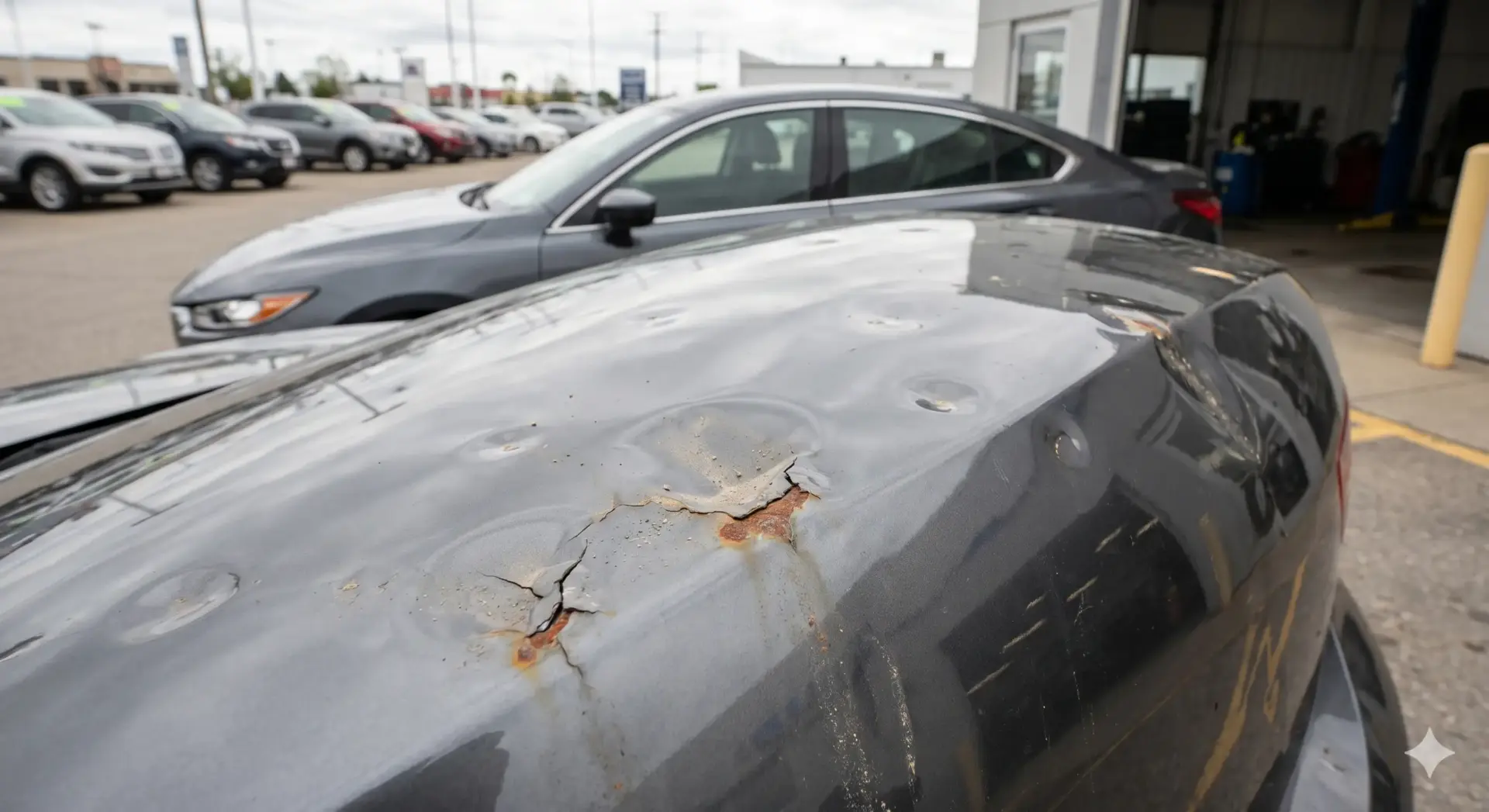
After a hailstorm, it’s tempting to glance at the dents, decide your car still drives fine, and move on. After all, isn’t hail damage just cosmetic? In 2026, that assumption is quietly costing vehicle owners thousands of dollars — and in some cases, their cars entirely. What happens if hail damage is left untreated goes far beyond a few unsightly dings. From microscopic paint failures to disabled safety technology to devastating resale penalties, the consequences compound silently over months and years.
This guide breaks down exactly what’s at stake when you leave hail damage unaddressed, so you can make a fully informed decision about your next step.
The Hidden Physical Risks of Untreated Hail
Most drivers focus on what they can see: the constellation of dents across the hood, roof, and trunk. But the damage that matters most is often invisible to the naked eye.
Micro-Fissures and the Rust Trap
A hail impact doesn’t have to crack your paint visibly to compromise it. The force of a hailstone — even a small one — creates micro-fissures in the clear coat, those hairline fractures too fine to see without magnification. Once the clear coat is fractured, moisture has a direct path to the bare metal beneath.
This is where untreated hail damage rust becomes a real problem. Oxidation typically begins within weeks of exposure and can produce visible bubbling paint within 6 to 12 months, depending on your climate and how often the vehicle is washed or exposed to rain. Once rust takes hold beneath the surface, it spreads laterally under the paint in a process body shops call “creeping corrosion.” By the time it’s visible, the repair is no longer a simple PDR job — it requires sanding, primer, and repainting, which is significantly more expensive and may never perfectly match your original finish.
Austin’s weather patterns, with humid summers and unpredictable spring storms, create ideal conditions for this kind of accelerated oxidation.
ADAS Sensor Failure
Modern vehicles — essentially any car built after 2019 — are equipped with a network of sensors and cameras that power Advanced Driver Assistance Systems (ADAS): Automatic Emergency Braking (AEB), Blind Spot Monitoring, Lane Departure Warning, and Adaptive Cruise Control. These sensors are embedded in bumpers, side mirrors, the rear fascia, and behind the windshield.
A dent in or near any of these locations can do more than look bad. It can physically misalign the sensor housing, change the camera’s field of view, or interfere with the radar signal. In practice, this means your AEB may fail to detect a pedestrian, your blind spot alert may stop triggering, or your lane-keep assist may give inaccurate warnings. After a hailstorm, ADAS sensor calibration is not optional — it’s a safety requirement. Leaving dents near these components unaddressed means driving with safety systems you can no longer trust.
Compromised Seals and Water Intrusion
Hail strikes don’t just dent metal — they stress the rubber and foam seals around sunroofs, door frames, and window moldings. A seal that looks intact after a storm may have been weakened enough to allow slow water intrusion during heavy rain. Over time, this leads to damp carpet, mold growth inside the cabin, and — in more serious cases — water reaching the vehicle’s electrical system. Electrical shorts from moisture damage are among the most expensive and unpredictable repairs a modern vehicle can require.
The “Total Loss” Trap: Why Waiting Is a Financial Mistake
Beyond the physical risks, leaving hail damage untreated sets you up for a much worse financial outcome if you’re ever involved in another weather event or accident.
Does Hail Damage Total a Car?
Yes — and it happens more often than most people expect. The standard formula is straightforward: if the cost to repair a vehicle exceeds a certain percentage of its Actual Cash Value (ACV), the insurer declares it a total loss. The hail damage car total loss threshold varies by state but typically falls between 60% and 80% of ACV.
In 2026, that threshold is easier to reach than ever. Labor rates at body shops have increased significantly due to technician shortages, and modern vehicles require expensive ADAS recalibration after almost any structural repair. A moderately hail-damaged SUV that would have been repaired five years ago may now tip past the total loss line — especially if aluminum panels are involved, since aluminum cannot simply be hammered back into shape and often requires full replacement.
Understanding the 2026 Total Loss Threshold
Here’s the math that surprises most owners: if pre-existing hail damage is on your vehicle when a second storm hits, the insurance adjuster doesn’t separate “new damage” from “old damage.” They evaluate the entire vehicle’s condition against its current ACV. Because your car’s value has already dropped due to the unrepaired damage, the ACV is lower — meaning the repair cost crosses the total loss threshold at a lower dollar amount.
In other words, by delaying repair after the first storm, you’ve made it significantly more likely that a future claim results in a total loss rather than a repair payout.
Double-Deductible Scenarios
If a second hailstorm hits before you’ve filed a claim on the first, you may face dual complications. Some insurers will treat the damage as a single event if it’s documented quickly; others will investigate the timeline carefully. In either case, unrepaired damage documented at the time of a new claim can reduce your payout, trigger disputes about what was pre-existing, and in some situations, result in a partial denial. Filing promptly after storm damage — and having it professionally repaired — eliminates this ambiguity entirely.
Resale and Trade-In: The 20% Penalty
If you’re planning to sell or trade in your vehicle in the next few years, untreated hail damage is one of the most damaging things you can do to your return.
Dealerships have become sophisticated at identifying hail damage during appraisals. Trained eyes and scanning tools catch dent patterns that owners have long since stopped noticing. When a dealer identifies untreated hail, they don’t just discount the repair cost — they apply a “neglect penalty” that signals the vehicle may have other deferred maintenance issues. The result is a trade-in offer that commonly runs 10% to 30% below market value for an equivalent undamaged vehicle.
The hail damage resale value impact is equally significant in private-party sales. Prospective buyers either negotiate heavily or walk away entirely, particularly if they know what to look for.
Paintless dent repair offers the clearest path to value recovery. Because PDR restores the original metal without repainting, it preserves the factory finish — the detail dealers and savvy buyers specifically check for when evaluating whether a vehicle has been repaired “correctly.” A professionally PDR-repaired car commands a substantially higher trade-in and resale price than a vehicle with visible or poorly repaired hail damage.
Insurance Complications of “Pre-existing Condition”
One of the lesser-known consequences of delayed repair is the effect on your future insurance coverage. When you file a comprehensive claim after a second weather event, your insurer will inspect the vehicle thoroughly. If they find evidence of older, unrepaired damage — paint oxidation patterns, rust bubbling, or dent deformation inconsistent with the recent storm — they can designate that damage as pre-existing and exclude it from the current claim.
In more serious cases, an insurer may argue that failing to repair documented damage constitutes a breach of your duty to mitigate losses, a standard clause in most auto policies. While this rarely results in a full claim denial, it frequently results in a reduced payout — sometimes significantly so.
Filing a claim and completing the repair promptly after a storm creates a clean documented record. If the car is ever damaged again, there is no ambiguity about what was pre-existing and what is new. This clean history also matters if you ever need to dispute a claim or appeal an insurer’s valuation. Learn more about how deductible coverage works for hail claims on our blog.
FAQ: What Happens If Hail Damage Is Left Untreated?
Can untreated hail damage cause rust? Yes. Even when paint appears visually intact after a hailstorm, the impact creates micro-fissures in the clear coat that allow moisture to reach bare metal. Oxidation typically begins within weeks, and visible bubbling or rust can appear within 6 to 12 months — particularly in humid climates like Central Texas.
At what point does hail damage total a car? Typically when repair costs exceed 60% to 75% of the vehicle’s actual cash value. In 2026, high labor costs and mandatory ADAS sensor recalibration have made it easier for moderate hail damage to reach this threshold, especially on late-model vehicles with aluminum panels or extensive sensor arrays.
Will leaving hail damage affect my safety? Potentially, yes. Dents near bumpers, windshields, or side mirrors can physically misalign ADAS sensors, disrupting systems like Automatic Emergency Braking and Blind Spot Monitoring. Additionally, the roof and pillars contribute to structural rigidity during rollover events — repeated or severe hail impact can compromise this integrity.
Does hail damage show up on a Carfax? It depends. If an insurance claim was filed or a participating repair shop reported the work, it will appear. Unrepaired damage won’t appear in a report but is consistently caught during dealer appraisals using visual inspection and scanning tools — and is often treated as more damaging to the vehicle’s value than a properly repaired, documented claim.
Is paintless dent repair a permanent fix for hail damage? Yes. When performed by a qualified technician, PDR restores the metal to its original shape without affecting the factory paint. The repair is permanent, and there is no risk of the dent “returning.” Hail-Tech PDR backs all PDR services with a lifetime warranty.
How quickly should I have hail damage assessed after a storm? As soon as possible — ideally within a few days of the storm. Prompt documentation protects your insurance claim timeline, prevents oxidation from beginning in micro-fissured paint, and ensures you have a clean vehicle history before any subsequent weather events occur.
Why a Professional Inspection Is Non-Negotiable
The case for acting quickly is straightforward: the risks of untreated hail damage — rust, sensor failure, total loss exposure, and resale penalties — all increase with time. None of them are visible until they’ve already cost you money.
A professional inspection by a qualified PDR technician takes less than an hour and gives you a clear picture of exactly what damage is present, what repair approach makes sense, and what your insurance options are. For many vehicle owners, hail damage repair through PDR is faster, less expensive, and less disruptive than they expected — and far less costly than the consequences of waiting.
If your vehicle was caught in a recent storm in the Austin area, contact Hail-Tech PDR today for a no-obligation estimate. Call us at 512-817-6357 or request a quote online — we’ll assess your vehicle, walk you through your options, and get you back on the road with confidence.