

If you’ve lived in Austin long enough, you already know the drill: clear skies one minute, golf-ball-sized hail the next. What you might not know is just how consistently the data backs that experience up. Texas hail damage statistics place the Lone Star State at the top of the national risk charts year after year, and Austin sits squarely in the high-exposure zone.
Austin, Texas hail risk isn’t just a weather quirk. It’s the product of geography, atmospheric conditions, and a storm corridor that runs straight through the heart of Central Texas. Understanding why this area gets hit as often as it does, and what those storms actually do to your vehicle, puts you in a much better position to protect what you’ve got. Here’s what history and science tell us.
Why Texas Leads the Country in Hail Damage
Texas sees an enormous amount of hail exposure. According to Cotality’s 2026 Severe Convective Storm Risk Report, Texas is the most at-risk state in the nation, with roughly 8 million homes exposed and a combined reconstruction value exceeding $3.1 trillion, and a significant portion of that activity runs straight through the I-35 corridor in Central Texas.
The reason comes down to Texas’s location. The Gulf of Mexico pumps warm, humid air northward across the plains. When that air mass collides with cold, dry air pushing down from the Rockies and the Great Plains, the resulting instability generates powerful updrafts inside storm cells. Those updrafts are what grow hailstones, and the stronger the updraft, the bigger the hail.
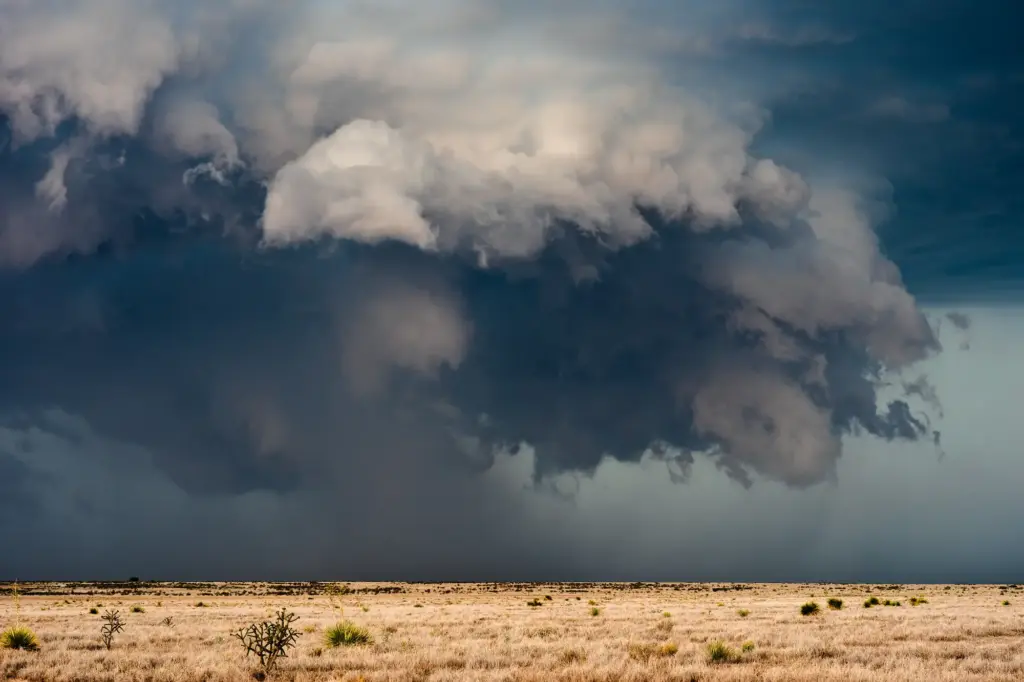
Central Texas falls within the southern zone of what meteorologists call “Hail Alley,” the broader corridor of hail-prone geography centered farther northwest across Colorado, Nebraska, Kansas, and Oklahoma. The same atmospheric ingredients that fuel that activity reach far enough south to make Central Texas an active, if less frequently discussed, extension of the same zone.
Where Austin Falls on the National Risk Map
Austin might not grab hail headlines the way Dallas does, but the numbers don’t lie. Austin ranks ninth nationally for hail-exposed properties, with an estimated 700,000 homes at risk and roughly $230 billion in potential damage, according to coverage of Cotality’s 2026 findings. Four Texas cities total make the top 10, and Austin is one of them.
For drivers, the vehicle exposure is just as significant. The Austin metro, including Cedar Park, Round Rock, Georgetown, Leander, and the surrounding Travis and Williamson County communities, sits in the high-frequency zone for Texas hail. This stretch of I-35 running from San Antonio through Austin to Dallas is commonly referred to as its own version of hail alley.
Part of what makes this stretch so active is the Balcones Escarpment, the geological boundary where the coastal plain meets the Hill Country. That elevation shift, however subtle it looks on a map, creates just enough atmospheric lift to trigger storm development when the other ingredients align. During May especially, when the dryline sits near this boundary and afternoon heating peaks, supercells form along this highway with real consistency. A single storm can work through Round Rock or Georgetown and leave thousands of vehicles dented in under an hour.
If your car has already been on the wrong side of one of those storms, our hail damage repair service page covers exactly how the PDR process works from initial assessment through final inspection.
A Look Back at Austin’s Most Damaging Hailstorms
Austin’s vulnerability to severe hail isn’t new. The city has a well-documented history of major events, and a few dates have become memorable enough that locals actually track them.
March 25 is one of them. Over the past three decades, that date has produced some of the most destructive and costly hailstorms in Austin’s recorded history, enough for it to earn an informal nickname among weather watchers: Austin Hail Day. Here’s a quick look at the standout events:
- 1993: A storm slammed Austin with tennis ball-size hail, causing an estimated $125 million in damage.
- 2005: Egg-size hail battered the Lake Travis area, resulting in roughly $100 million in losses.
- 2009: A major storm hit during the afternoon commute, with golf ball- to teacup-size hail causing more than $150 million in damage along the Travis-Williamson county line.
Since 2004, there have been 145 recorded hail reports within 10 miles of Austin’s city center, with the largest event on record producing 4-inch, grapefruit-sized hailstones. That’s not a freak occurrence. It’s a pattern, though notably one that runs ahead of Austin’s statistical peak. March 25 falls near the front edge of the primary hail season, weeks before April and May, when storm frequency and severity typically climb highest on average. The takeaway isn’t that the seasonal outlook is wrong. It’s that Central Texas hail risk doesn’t wait politely for peak season before it produces a damaging storm.
When to Expect Storm Activity Each Year
Austin’s storm exposure isn’t spread evenly across the calendar. The primary hail season runs March through June, with April and May historically producing the most frequent and most severe events on average. There’s also a secondary window in October and November, though those storms tend to be shorter-lived and less intense.
That said, outliers happen: March 25 has produced three of Austin’s costliest hailstorms on record, ahead of the statistical peak, which is exactly why the whole March-through-June window deserves attention, not just the busiest weeks inside it.

The timing matters for a practical reason: most of Austin’s damaging storms form along the I-35 corridor in the late afternoon, when surface heating peaks and convection fires up fast. By the time a warning hits your phone, the storm is often already moving through. Williamson County north of Austin is particularly exposed. The flat terrain provides no natural barriers to storm movement, and systems that fire to the west tend to track directly through Cedar Park, Round Rock, and Georgetown along the I-35 path.
Knowing the season also helps you think ahead about your vehicle. Unrepaired hail damage doesn’t just look bad. It can affect your car’s resale value in ways that add up quickly. Our guide to hail damage and car resale value breaks down what that impact looks like in real dollar terms.
What Hail Does to Your Car, by the Numbers
Hail damage isn’t always dramatic. It can be dozens of shallow dents easy to miss in the wrong light, or it can be deep creases and cracked glass. Stone size, along with impact speed and angle, determines which you’re dealing with:
- Pea-sized (under 0.5 inches): Generally too small to dent modern panels on its own, though high wind velocity can change that.
- Dime- to quarter-sized (0.5 to 1 inch): Capable of producing shallow dents on aluminum panels and softer metals, especially on hoods and roofs.
- Golf ball-sized (1.75 inches): Significant panel damage across multiple surfaces, potential windshield cracking, and damage to exterior trim.
- Baseball-sized (2.75 inches) and larger: Structural damage territory. Events at this size have been recorded in Central Texas, and repair costs can push into the thousands.
For dents without paint damage, which covers most hail events, paintless dent repair is the most effective fix, preserving the factory finish at a fraction of the cost and turnaround time of traditional bodywork. To get ahead of the damage altogether, our guide on protecting your car from hail damage in Austin covers prevention habits and what to do if you’re caught in a storm.
Frequently Asked Questions About Austin Hail Risk
Is Austin actually in Hail Alley?
Yes. Central Texas falls within the southern zone of Hail Alley, and the I-35 corridor through Austin is one of the most hail-active stretches of interstate in the country. The combination of Gulf moisture, cold fronts from the Rockies, and the Balcones Escarpment creates ideal conditions for severe storm development.
Which months are most dangerous for hail in Austin?
April and May are historically the most active months for damaging hail in the Austin area. The broader primary season runs March through June, with a secondary risk window in October and November.
How many significant hail events does Austin see in a typical year?
The Austin metro averages 5 to 8 significant hail events per year, where “significant” means hail measuring one inch in diameter or larger. In active years, that number can double.
Does hail damage affect my car’s resale value even after it’s repaired?
It can, depending on the repair method. Traditional bodywork that involves repainting panels can trigger flags on appraisal tools and vehicle history reports. PDR, which preserves your factory paint, tends to have a much smaller impact on resale value, and in many cases a well-documented PDR repair reassures buyers rather than raising questions.
Austin’s Storm Season Returns Every Year. Your Car Deserves a Plan
Hail season comes back around reliably, and the storms that move through the I-35 corridor don’t give much notice. The drivers who come out of it in the best shape are the ones who get a professional inspection quickly, before small dents become bigger problems and before insurance deadlines close the window on a claim.
Hail-Tech PDR serves Austin and the surrounding areas including Cedar Park, Round Rock, Georgetown, Leander, Anderson Mill, and Four Points. If your vehicle took a hit this season, request a quote online and we’ll get you a clear picture of what the repair involves.